ServicesGutters
Gutters in Siler City
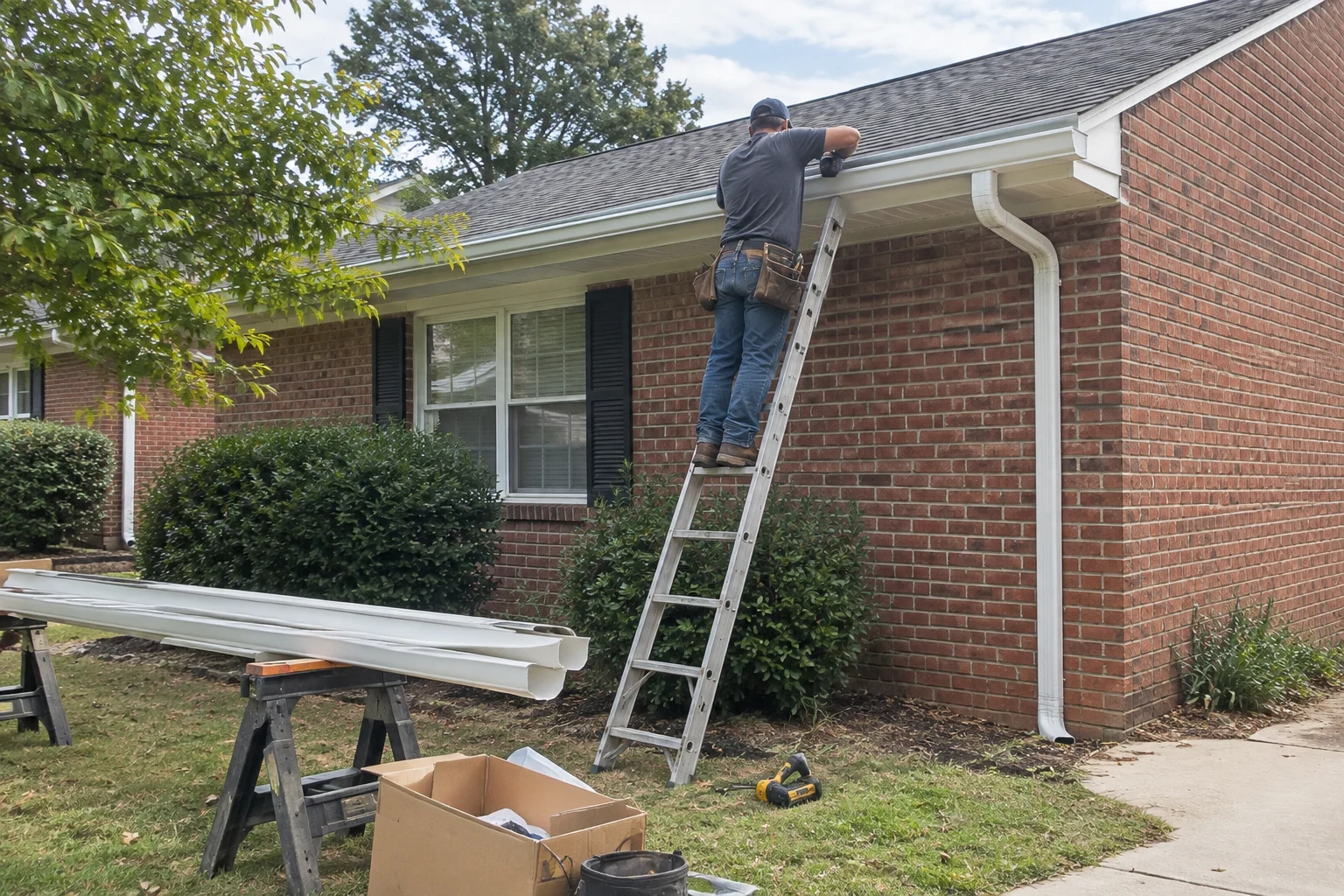
We install, replace and repair one-piece aluminum gutters sized to your roof and pitched so water reaches the downspouts instead of spilling over the front edge. Once the work is finished, we return to check each run and show you how to keep it clear.
What a gutter system actually has to do
A gutter is the last part of your roof's drainage path. Water runs off the shingles, over the drip edge and into the trough, then down the downspouts and out away from the house. If any link fails, the water ends up behind the fascia, down the siding or in the soil next to your foundation.
Most gutter trouble we find traces back to one of three causes. The run has too little fall, so water sits and spills over. Hangers have pulled out of soft fascia. Or the downspouts empty right at the base of the wall. Piedmont clay holds water and swells, so a downspout that discharges a foot from the foundation can keep a crawlspace damp for days.
Roofing Siler City has been in business 10 years. We hold an NC and SC unlimited builder license, and since roof repair and roof replacement are also part of our work, we judge the gutter and the roof edge as one system rather than treating the trough by itself.
What comes with our gutter work
- One-piece aluminum runs
- We form the gutter from coil right in your driveway and cut each piece to the full length of the wall. The only joints are at mitered corners and end caps, so far less sealant sits exposed to summer heat and winter freeze-thaw cycles.
- Sizing and fall matched to your roof
- Gutter width and downspout size are chosen for the roof area and pitch that drain into them, and each run gets a steady slope toward its outlet. Steep roofs with long valleys often call for a larger trough or an added downspout to handle a hard downpour.
- Hidden hangers set in solid framing
- Each hanger is driven with a screw that passes through the fascia board and bites into the rafter end or blocking behind it. We space them tight enough to carry a trough full of wet leaves and water, and screws hold where the old nail-style spikes back out over time.
- Fascia and drip edge check
- Before anything new goes up, we probe the fascia for rot and make sure the drip edge laps into the gutter. Soft boards are replaced so the hangers have sound wood to grip.
- Downspouts and extensions
- Downspouts go where the water can be led away, and extensions or splash blocks put it down clear of your foundation, walks and planting beds.
- A return visit and care notes
- We come back to check the joints and the fall, then leave you short notes on when to clean, what to look for after a storm and when to give us a ring.
Signs your gutters need attention
Water sheeting over the lip
Overflow in a moderate rain usually points to a clog, a run that has lost its fall, or a trough undersized for the roof area feeding it.
Dips between hangers
A low spot holds water and debris, which adds weight and pries the gutter further from the wall. The fascia behind it is often soft.
Stains or peeling on the fascia
Dark streaks or blistered paint below the gutter line mean water is getting behind the trough, often because the drip edge is missing or the gutter hangs too low.
Drips at seams and corners
Old sectional gutters rely on sealant at every joint. Once it cracks, each seam leaks and the wood below stays wet.
Washed-out soil or damp crawlspace
Trenches in the mulch, puddles along the walls or a musty crawlspace following storms mean the downspouts are not carrying water far enough.
What moves the price of a gutter job
Most of a gutter estimate comes down to how many feet of trough we hang and what shape the wood behind the old gutters is in. Every line on our estimate is spelled out, so you can see what each part of the job costs. If you would rather pay over time, financing is available through Acorn Finance.
Total footage and number of corners
Each extra foot of run adds coil stock and hanging time. Every inside or outside corner has to be mitered, fastened and sealed by hand, so a house with many jogs in the roofline costs more than a simple rectangle of the same length.
Gutter and downspout size
Wider gutters and oversized downspouts carry a higher material cost. On steep roofs, or where a long valley empties into one short stretch, they are often what keeps the water inside the trough.
Fascia condition
New hangers need sound wood, so rotted fascia gets replaced first. The full extent of rot often stays hidden until the old trough comes down. If we uncover more, we photograph it and talk it over with you before any work is added.
Height and access
Two-story eaves, sloped yards and narrow side yards slow the work and can call for extra ladder setup.
Storm damage and insurance
When hail or a falling limb has dented or torn your gutters, the claim may pay for them. We can meet with your adjuster and help you through the insurance claim process.
Our gutter work, step by step
- 1
Measurements and a photo report
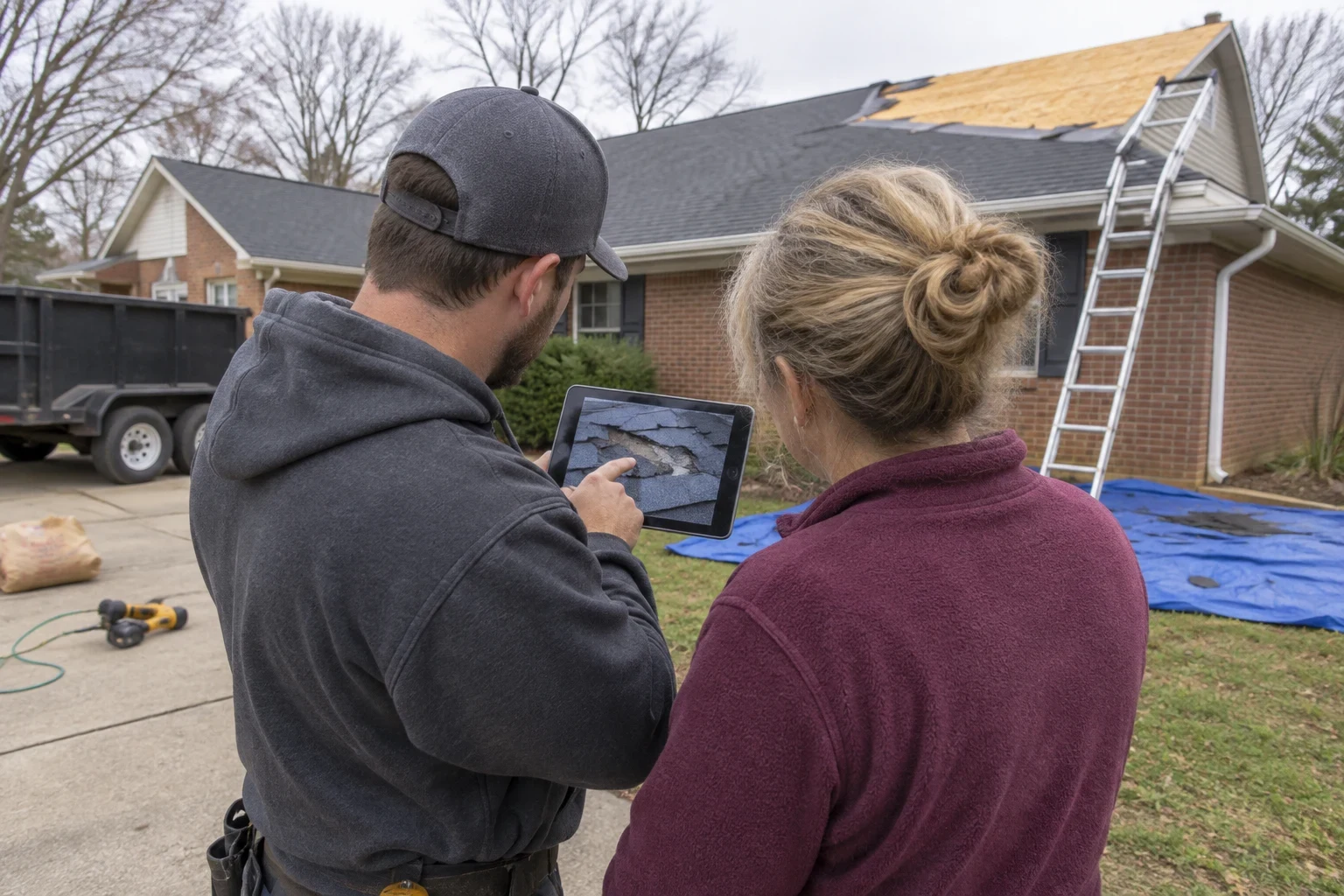
We measure every run from a ladder and from the yard, then check the fascia, drip edge and each downspout outlet. You receive photos of the problems we spotted and a written, line-item estimate, which we go over by phone or in person.
- 2
Tear-off and wood repair
Old gutters come down and go in our trailer. Rotted fascia is replaced and drip edge is corrected before anything new is hung.
- 3
Forming and hanging
We roll the gutter on site, cut it to length, set the pitch with a string line and fasten the hangers into solid wood. Downspouts and extensions go on last, and we run a hose through each section to confirm it drains.
- 4
Cleanup and the check-back
We pick up cut-offs, screws and old sealant from the beds and lawn. Later we return to look the system over and walk you through cleaning and how a healthy gutter should behave in a storm.
Common gutter questions
Is it smart to put on new gutters at the same time as a new roof?
In many cases, yes. The drip edge and the back of the gutter meet at the same edge of the roof, and installing both together lets us set them correctly in a single visit. On architectural shingle roofs, the roofing work is covered by our 5-year workmanship warranty on architectural shingle roofs.
How often should gutters be cleaned around here?
Twice a year suits most homes: after the oaks finish shedding in late fall, and again in spring once pollen and seed pods have settled. Pine needles mat into a dense layer that plugs outlets, so houses under pines may need it more often. Our care notes spell out a schedule for your home.
Can my gutters be fixed, or do they have to be replaced?
If the trough itself is sound, repair is usually the answer. We can reset sagging sections, add hangers, reseal corners and re-pitch a run. When the metal has corroded through or most seams are leaking, new gutters cost less over time than patching them again and again, and our photos show you exactly what we found.
Why do my gutters overflow even when they are clean?
The usual causes are a run that has lost its fall, a downspout too small for the job, or one outlet draining more roof than it can handle. In a hard rain, water coming off a valley can also shoot past the front lip. We look at each of these during the inspection.
Do you check the gutters again after they are installed?
Yes. We come back to look at the joints and the fall of each run and to answer your questions. If a seam drips or a section holds water, we adjust it. You also keep our notes on cleaning and what to watch for when a storm passes.
Find out what your gutters are doing to your home
We will check the gutters, fascia and roof edge and send you photos of what we see, with no charge for the inspection. We serve Siler City and nearby towns including Pittsboro, Liberty and Sanford.