ServicesRoof Replacement
Roof Replacement in Siler City, NC
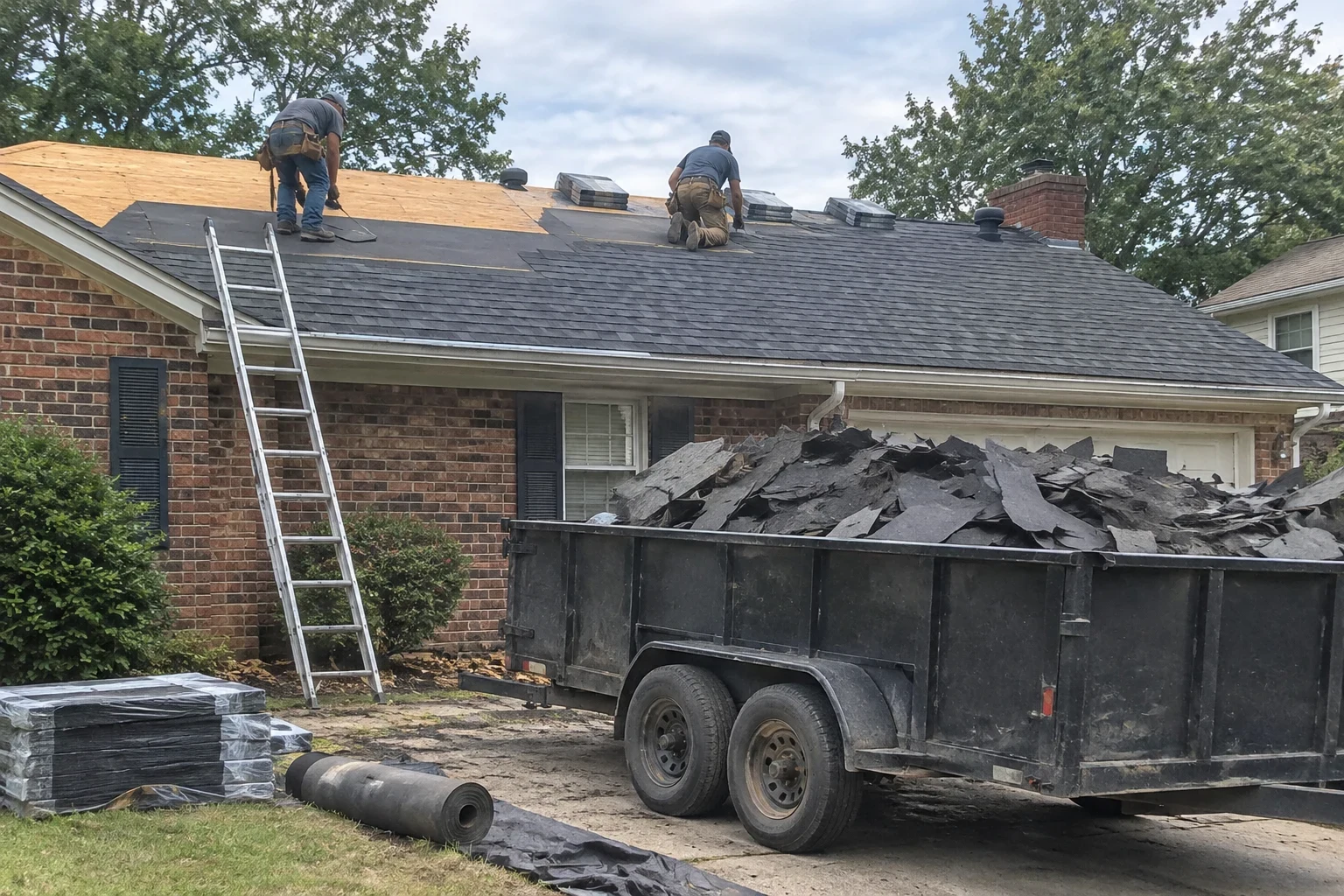
We remove the old roof to the bare decking, replace any sheathing that has gone soft and install a new shingle system with matched underlayment, flashing and ventilation. Once the roof has seen real weather, we return to inspect our work and explain the upkeep that keeps it sound.
When replacement is the right call
A new roof is the answer when the damage is spread across the whole surface instead of sitting in one spot. Shingles worn down to the black mat, asphalt that snaps when you flex it and sheathing gone spongy from years of small leaks all say the system is finished. Patching a roof in that shape usually just sends water to the next weak point.
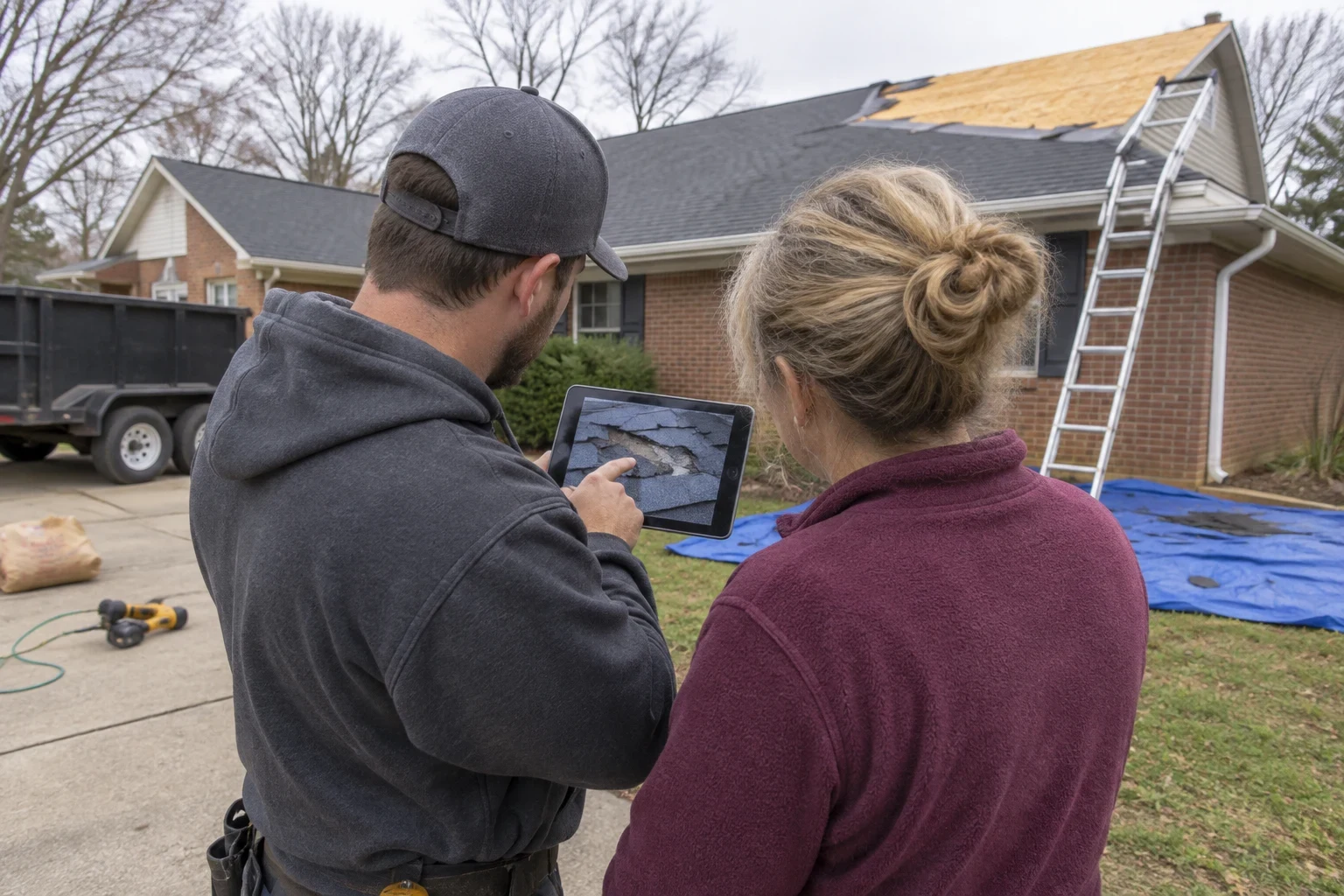
We start with a free roof inspection and a photo report, so you can see the bare spots, failed seal strips and soft decking yourself. When roof repair can honestly buy you several more solid years, we tell you that. When it can't, we give you a written, line-item estimate for a full tear-off.
Our work is done under an NC and SC unlimited builder license, and we've been in business 10 years. What sets our replacements apart is what happens afterward. We schedule a return trip once the roof has taken some weather to recheck flashing and sealant, and we explain the simple upkeep that keeps a new roof doing its job.
What a full replacement includes
- Complete tear-off
- We strip every old shingle and every scrap of underlayment until bare decking shows. A second layer nailed over the first would hide soft wood, trap heat and put extra weight on the rafters, which is why we never install a layover.
- Decking repair
- Once the boards are open, we walk the whole deck and replace OSB or planks that are soft, delaminated or stained through. These sheets show up as a separate line on your estimate, so the count is clear before work begins.
- Ice and water shield plus synthetic underlayment
- Self-sticking membrane lines the valleys, the eaves and every penetration, and synthetic underlayment covers the rest of the deck. If a strong gust lifts a shingle tab during a summer storm, that layer still sheds the rain.
- New flashing, drip edge and pipe boots
- Drip edge, step flashing where the roof meets a wall and the rubber boots around plumbing vents are all new. Old flashing tucked under fresh shingles is a leading cause of leaks on roofs only a few years old.
- Balanced attic ventilation
- We measure intake at the soffits against exhaust at the ridge and fix whichever side falls short. Trapped attic heat cooks shingles from below and shortens how long they last.
- Architectural shingles backed by our warranty
- Laminated architectural shingles are heavier than three-tab and hold up better in wind. We back the installation with our 5-year workmanship warranty on architectural shingle roofs.
Signs your roof needs replacing, not patching
Bald or curling shingles
Granules collecting in the gutters and shingle edges that cup or claw upward mean the asphalt has dried out. Without granules, sunlight breaks the mat down fast.
Leaks that keep moving
A single leak is a repair. Leaks that turn up in a different room every time one is fixed point to underlayment failing across the roof.
Soft or dipping decking
A wavy roofline seen from the street, or boards that give under foot, tell us the sheathing has soaked up water for a long time. That wood has to be replaced, and the shingles fastened to it come off too.
Stains or daylight in the attic
Dark rings on rafters, damp insulation or pinpoints of light through the boards show that water and air are getting past the roof.
An aging roof hit by a hard storm
Once hail or high wind strikes an asphalt roof near the end of its life, the brittle shingles around the damage often crack when lifted, so a patch won't hold. Our storm damage repair page explains how we separate repairable damage from a full loss.
What moves the price of a new roof
Your price comes from the measurements and photos we take at the inspection, not from a rough guess off a satellite image. The condition of the decking is the one thing nobody can fully see until the shingles are off, so replacement sheets are listed as their own line. Financing available through Acorn Finance. When hail or wind did the damage, we also offer adjuster meetings and help through the insurance claim process.
Square footage and slope
Shingles and underlayment are ordered by the square, so a larger roof costs more in both material and hours. A steep pitch means roof jacks, harnesses and slower footing for every row we lay.
Old layers and sheathing
A roof with two layers of shingles takes more labor to strip and more disposal capacity to haul away. Any rotted OSB or plank boards found under them become added sheets on your estimate.
Chimneys, skylights and valleys
Every opening and every change in roof plane gets its own flashing. A simple gable roof goes quickly, while a roof with dormers, a chimney and several valleys takes noticeably more detail work.
Attic ventilation fixes
Cutting in ridge vent or opening blocked soffit intake adds labor. It also lowers attic heat, which protects the new shingles from drying out early.
How the job runs, from inspection to follow-up
- 1
Inspection and photo report
We go over the shingles, flashing and vents, then climb into the attic to look at the underside of the deck. You get a set of photos with a short explanation of each problem we found.
- 2
Written estimate and permit
The estimate breaks out materials, deck repair, flashing and haul-off line by line. After you sign off, we pull the permit wherever the job calls for one.
- 3
Tear-off and dry-in
Before any shingles come off, we cover shrubs and protect siding and windows below the eaves. We strip and dry in one section at a time with underlayment, so no part of your home sits exposed to rain.
- 4
Cleanup and walkthrough
Old material drops directly into a dumpster or trailer, and a rolling magnet sweeps the yard, flower beds and driveway for loose nails. We then walk the new roof with you and point out the flashing and vent work.
- 5
Check-back visit and care guide
After a stretch of real weather, we return to look over seals, pipe boots and gutters. We also explain how to keep valleys clear of debris and when it's smarter to call us than to climb a ladder.
Roof replacement questions
How long does a roof replacement take?
Most houses take one to two working days. Size, pitch, the amount of deck repair and the weather all shift that number. Because each section is covered with underlayment before we open the next, a pop-up shower won't soak your home. Your estimate lists the schedule we expect.
Can you put new shingles over my old roof?
No, we always tear off. Shingles laid over an old layer sit on top of any rot we can't see, add load to the rafters and run hotter. Stripping to the deck lets us repair soft spots and set new flashing the right way.
Will my insurance pay for a new roof?
Coverage hinges on the cause of the damage and the wording of your policy. Insurers generally exclude normal aging, but sudden hail or wind damage is often covered. We can be on the roof when your adjuster visits, show our photos and help you through each step of the claim.
What warranty comes with the new roof?
Architectural shingle roofs we install carry our 5-year workmanship warranty. It covers the installation itself, meaning the work our crew does on your roof. We explain the details on the phone and put them in writing with your estimate.
What happens at the check-back visit?
After the roof has been through a few rounds of rain and wind, we return to look at pipe boots, flashing seals, ridge cap and gutters for anything that moved or settled. We also point out what to keep an eye on, such as leaves and pine straw building up in the valleys.
Find out whether your roof needs replacing
We'll inspect the roof and attic and send you a photo report of what we see. The decision is yours, and if we replace the roof, we return later to check our work.