ServicesSiding
Siding Installation and Repair in Siler City
When vinyl or fiber cement siding cracks, buckles or lets water through, we fix the wall from the sheathing out, including housewrap, flashing and the joint at your roofline. Once the work has been through some weather, we return to check it and show you simple care.
Siding is a water barrier first
Siding sheds most rain, but the layer that keeps your home dry is behind it: housewrap, flashing at every opening and a kickout flashing where a roof edge meets a wall. When siding cracks, warps or comes loose, water gets past it and soaks the sheathing. That rot stays hidden until boards soften or paint inside starts to bubble.
We are a roofing company, so we look at siding where it meets the roof. Step flashing, kickouts and gutter discharge cause a large share of the wall rot we find. Sometimes a few panels and a corrected flashing fix the problem. Sometimes a full wall or the whole house is the honest answer, and we will tell you which one we see and why.
Inside a siding job
Damaged panels and boards
Split, punctured or buckled vinyl comes out, and so do broken fiber cement boards. We match profile and exposure as closely as available stock allows, and we tell you before work starts if the color difference will be visible.
Sheathing under the siding
Once the siding is off, we probe the OSB or plywood beneath it. Anything soft or delaminated is cut out and replaced before the wall gets closed up.
Housewrap and flashing details
We lap new housewrap so each upper piece overlaps the one below and water drains outward. Kickout flashing goes where roof edges meet walls, and hose bibs, vents and light blocks get flashed too.
Re-siding a wall or the whole house
We take old siding down to bare sheathing, fix the substrate and hang new vinyl or factory-finished fiber cement on a starter strip with corner posts and J-channel.
Help with storm claims
Hail and wind tend to hit siding and roofing at the same time. We are there when your adjuster inspects and help with the claim paperwork, though the adjuster's role stays with the insurer.
Signs your siding needs attention
Panels that rattle or bow
Vinyl nailed too tight cannot expand in summer heat, so it buckles. Panels nailed too loose or with failed nails flap in wind and eventually unlock from the course below.
Soft spots near the roofline
Press the wall where a lower roof meets it. If it gives, a missing kickout flashing has likely been dumping roof water behind the siding for years.
Cracks and hail dents
Older vinyl turns brittle and cracks on impact. Each opening lets wind-driven rain reach the sheathing.
Mildew that returns fast
Our humid Piedmont summers grow mildew on shaded walls, but growth that comes back within weeks often means moisture is trapped behind the panels.
Swelling at the bottom courses
Fiber cement and wood set too close to soil or mulch wick up water. Swollen or flaking lower edges point to grade and clearance problems.
How a siding job runs
- 1
Inspection and photos
We look at the siding, flashing details and the roof edges above it, then send a photo report of what we found. You get a written estimate with each line explained.
- 2
Prep and protection
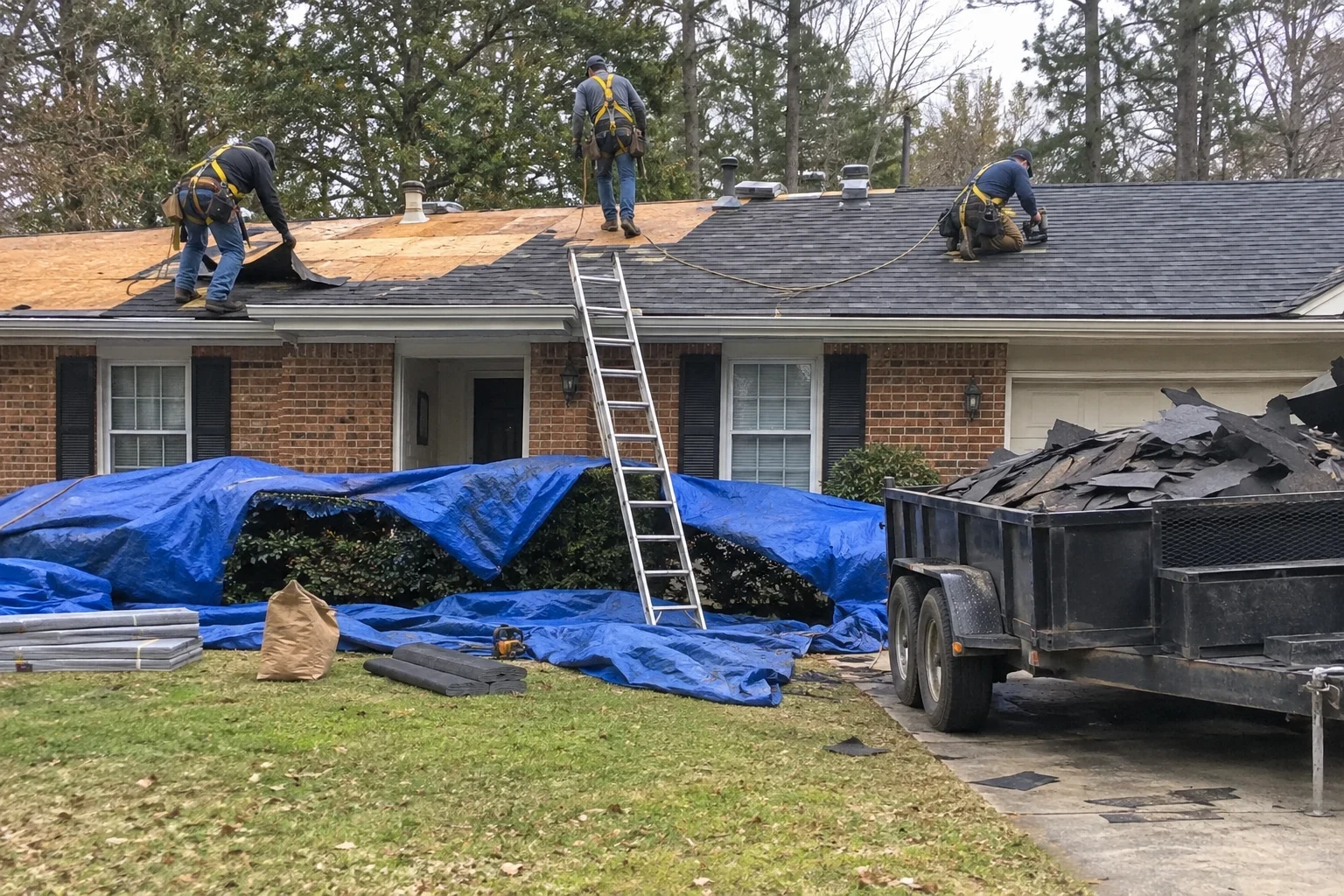
We lay tarps over beds and walkways, move what needs moving, and set up so debris lands where we can collect it. Nails get swept with a magnet at the end of each day.
- 3
Tear-off and substrate repair
Old siding comes off one section at a time so walls are not left open overnight. Damaged sheathing is replaced, then housewrap and flashing go on before new siding.
- 4
Installation and walkthrough
Vinyl is hung with nails centered in the slots and left a hair loose so panels can move with temperature. We walk the walls with you and point out each flashing detail.
- 5
Follow-up visit
After a season of heat and rain we come back to check for buckling, loose trim and any water staining. We also go over how to wash the siding and keep soil and mulch clear of the bottom course.
What moves the price of a siding project
The panels are only part of the bill. Labor, access and the condition of the sheathing usually decide where the number lands. We measure every wall during the inspection and break the estimate into separate lines, so you can see what each part of the job costs. Financing is available through Acorn Finance.
- Wall area and height
- More square footage means more material. Second-story walls and tall gables need staging or a lift, and that setup adds labor hours.
- Vinyl or fiber cement
- Vinyl is lighter and goes up faster, so it costs less to install. Factory-finished fiber cement weighs more, has to be cut with dust control and takes longer to hang, but it handles hail and summer heat better.
- What the sheathing looks like
- Rotted OSB or plywood gets replaced by the full sheet. Nobody can see it until the old siding is off, so your estimate spells out how we price any bad sheathing we uncover.
- Corners, trim and openings
- Every inside and outside corner, gable end, soffit return and wall penetration needs its own cuts and flashing. A wall with lots of detail takes more time than a plain one.
Siding questions homeowners ask us
Something not covered here? (919) 626-8024
Can you replace just a few damaged panels?
Often, yes, as long as the sheathing underneath is solid and we can find a close match. Sun fades vinyl over the years, so a fresh panel on an older wall may look a shade brighter. We bring a sample to hold against the wall first, and you choose between a patch and re-siding that side.
Why does a roofing company do siding?
Many wall leaks start where a roof edge meets the siding, and a proper fix involves both. We have been in business 10 years and hold an NC and SC unlimited builder license, so one crew can handle the roofline and the wall together instead of splitting the job between two trades.
Vinyl or fiber cement for my house?
Vinyl costs less, weighs less and needs very little upkeep, though hail can crack it and a grill parked too close can warp it. Fiber cement resists impact and heat and holds its shape, but it costs more to install. We weigh both against your budget and how much sun and weather each wall takes.
Will insurance cover hail-damaged siding?
Many policies do when a covered storm caused the damage. We photograph every dent and crack, meet the adjuster on site and help you through each step of the claim. Your insurer makes the final decision on coverage.
How should I clean new siding?
A garden hose, a soft brush and mild soap are enough. Work from the bottom up so streaks do not set. Leave the pressure washer in the garage, because it drives water under the laps and behind the housewrap. On our return visit after the first season, we will walk you through the routine in person and answer any questions about upkeep.
Have us look at your walls and roofline
We will check the siding, the flashing and the roof edges above it, then send you photos of what we found. Homeowners in Siler City, Pittsboro, Liberty and Asheboro get the same visit.