ServicesRoof Repair
Roof Repair in Siler City, NC
We trace a leak or failed part back to its cause, fix that part with matched materials and show you photos of what we found. Afterward we check back to confirm the repair is holding and explain how to keep it that way.
Fixing the cause, not the stain
Most roof leaks do not start where the ceiling stain appears. Water gets in at a cracked pipe boot, a lifted piece of step flashing or a nail that has backed out of the deck, then runs along the underlayment or a rafter before it drips. A patch over the spot above the stain usually fails by the next hard rain.
Roof repair is the right call when the rest of the roof still has life: shingles lie flat, hold their granules and seal to each other, and the decking is firm underfoot. Our company holds an NC and SC unlimited builder license. Across 10 years in business, a large share of our jobs have been catching small failures like these before they rot a deck.
Sometimes what we find says the shingles are close to worn out. When that happens we tell you directly and price a roof replacement alongside the repair, so the two options sit side by side.
What a repair covers
Leak tracing from attic and roof
From the attic we look for water trails and darkened nail tips on the underside of the decking, then line them up with the shingles and flashing above. That points to where water enters, not just where it drips.
Pipe boots and vent flashing
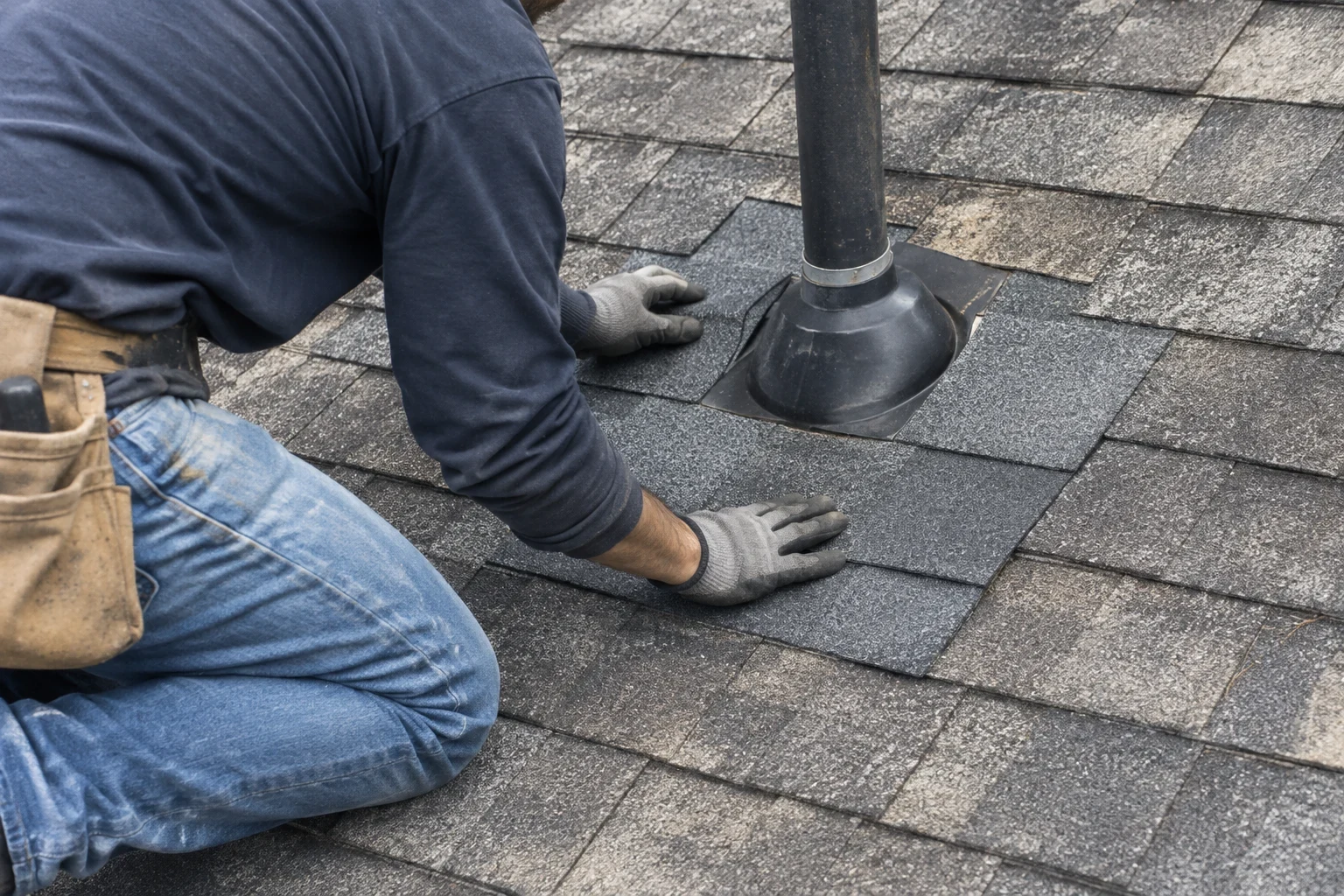
The neoprene collar around a plumbing vent dries out and splits after years of summer sun, and it is one of the leak sources we find most often. We replace the boot and reset the shingles around it.
Step and counter flashing
Along a sidewall or chimney, every course of shingles should have its own L-shaped flashing piece tucked behind the siding or counter flashing. A bead of caulk over a gap only buys a few months, so we rebuild the flashing the right way.
Shingle replacement and matching
We pull damaged shingles without tearing the seal strips on their neighbors, then hand-seal the new tabs. Profile and color are matched as closely as current products allow.
Decking and underlayment
Plywood that has gone soft or delaminated under a long-running leak is cut back to solid framing and replaced. New underlayment is lapped in before the shingles go back on.
When a roof is asking for a repair
- Water marks inside
- A yellowed or brown spot on the ceiling that spreads after each storm means water is getting to the drywall. The entry point is often several feet upslope from the mark.
- Granules piling up in the gutters
- Asphalt shingles shed some grit when new, but heavy granule loss on an older roof exposes the asphalt to UV and speeds cracking.
- Lifted, creased or missing shingles
- Wind can break the adhesive strip and fold a shingle back. Once creased, it no longer seals and lets wind-driven rain under the course above.
- Damp decking or daylight in the attic
- Wet sheathing, mildew on rafters or light around a vent pipe all point to an opening that needs closing before the wood softens.
- Rot at the drip edge or fascia
- Soft wood along the eaves usually means water is getting behind the gutter or under a missing drip edge. That is a roof repair first and a trim problem second.
From first visit to follow-up
- 1
Free inspection with photos
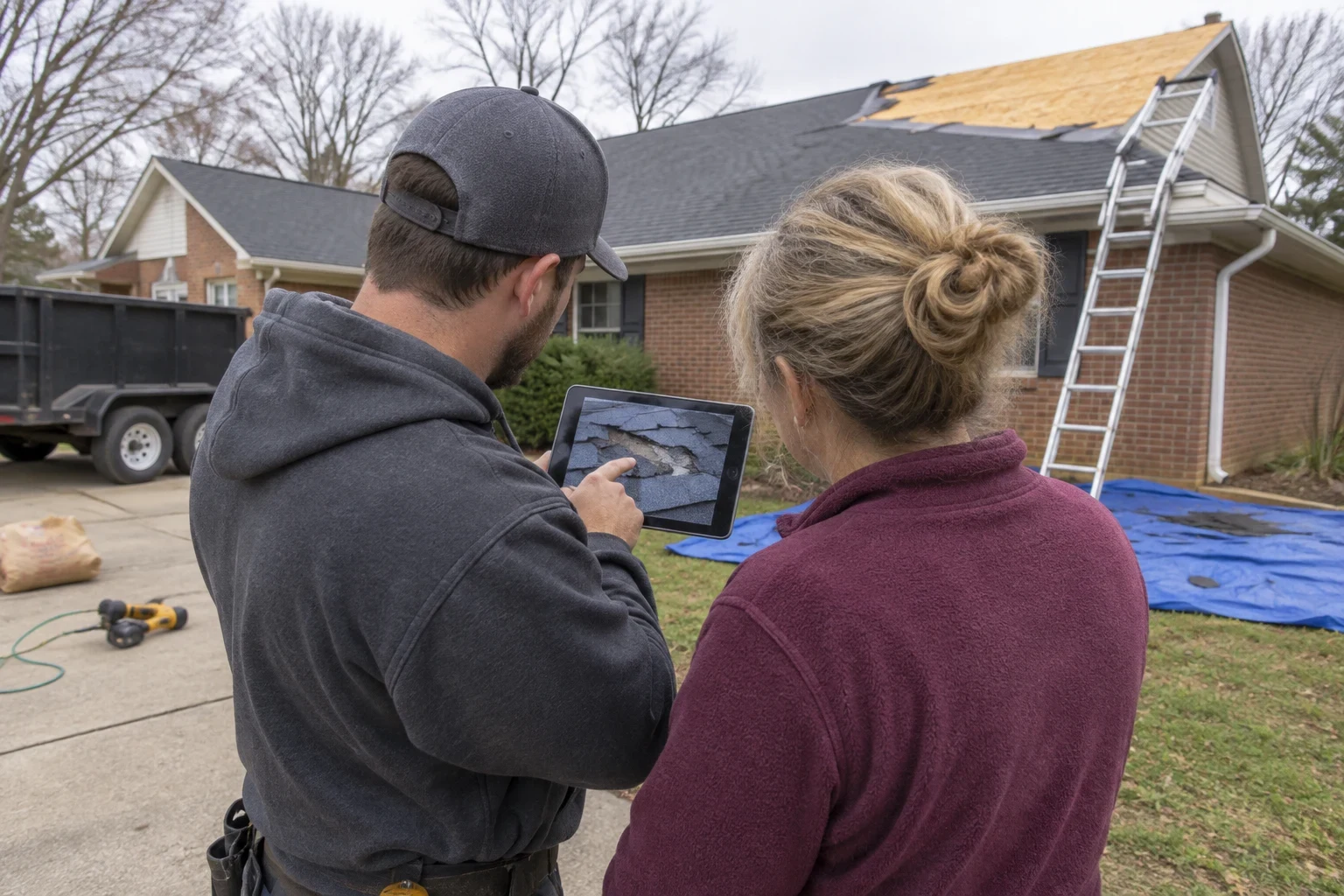
We check the roof surface and the attic, then sit down with you and go through photos of each problem and what caused it.
- 2
A priced plan on paper
Each failed part, from a boot to a run of flashing, is listed with its own price. Anything we looked at and judged sound is noted too, so the scope is clear before work starts.
- 3
Repair day
Tarps go over your landscaping, the repair gets done, and a magnetic sweeper runs over the driveway and beds to pick up stray nails. Most single-area repairs wrap up in one visit.
- 4
We check back
Once the repair has been through some rain, we follow up to confirm the inside is staying dry. We also cover what to keep an eye on: clear gutters, limbs trimmed back from the shingles, and a quick attic look after big storms.
What sets the cost of a roof repair
A repair is priced by which part failed and how much work it takes to reach and fix it correctly. You get that figure in writing once the inspection is done. Financing available through Acorn Finance if a larger repair does not fit this month's budget.
- Which part has failed
- Swapping out one pipe boot is a short job. Rebuilding step flashing along a sidewall means lifting and relaying a full column of shingles.
- Roof slope and working height
- A walkable single-story roof is quick to set up on. A steep pitch or a second story calls for toe boards, fall protection and extra setup before any repair starts.
- What is under the shingles
- Decking stays hidden until the shingles come off. If the plywood is soft, we photograph it and price the new sheathing before we install it.
- Out-of-production shingles
- Many older three-tab lines are no longer made. Tracking down a close match can take more sourcing time than the repair work.
Roof repair questions
- Should I repair my roof or replace it?
- When the leak traces back to one failed part and the shingles elsewhere lie flat, stay sealed and keep their granules, a repair is the sensible choice. Widespread cracking, curling or several separate leak points change the math, because repeat repairs end up costing more than they save. You see the photos and get a straight answer either way.
- Can you match my existing shingles?
- Often close, sometimes exact. New shingles look a shade different at first because yours have weathered, and the gap narrows over a season or two. If your shingle line has been discontinued, we tell you before any work begins.
- Is there a warranty on the work?
- Our 5-year workmanship warranty covers architectural shingle roofs. Before the repair starts, we go over how it applies to your roof and the specific work being done.
- Will my insurance pay for a leak repair?
- Policies generally pay for sudden damage such as wind or hail, not wear from age. When a storm is the cause, we provide adjuster meetings and help through the insurance claim process. The Storm Damage Repair page explains how that works.
- How long does a typical repair take?
- A pipe boot, a section of flashing or a small patch of shingles usually takes a few hours. Repairs that include new decking can fill a full day. We book repairs around dry forecasts so your roof is never left open overnight.
Find out what is really causing the leak
We will inspect the roof and attic, photograph what we find and explain the fix. After the repair, we check back to make sure it stays dry.