ServicesRoof Inspections
Roof Inspections in Siler City, NC
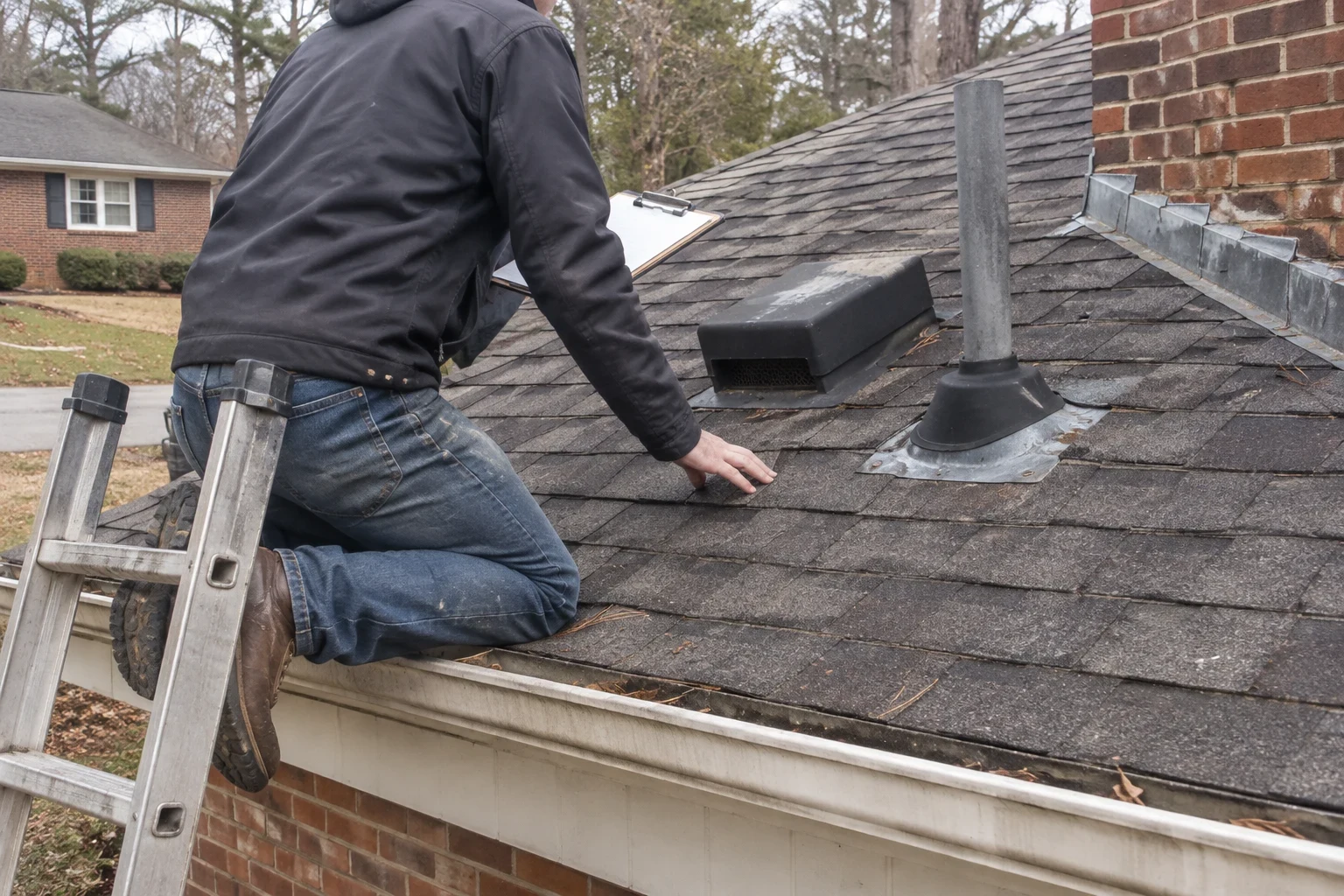
We get on your roof, check the shingles, flashing, pipe boots and decking, then look at it from the attic side. You get a photo report that shows what we found and why it matters, plus a straight answer on what needs work now, later or not at all.
Why an inspection is worth an hour of your time
Leaks rarely begin where you can see them. A cracked rubber boot around a plumbing vent, a shingle tab that has lost its seal, or step flashing pulling away from a sidewall can let water soak the decking for months before a ceiling stain appears. Catching those failures early keeps them in repair territory.
We do roof inspections before you buy or sell, following a hard storm, once a roof passes about 15 years, or whenever something looks off. Central North Carolina's summer thunderstorms, humidity and occasional ice work on asphalt shingles from every direction, so a yearly look costs far less than the damage it catches.
Our company has spent 10 years on roofs around here, and we work under an NC and SC unlimited builder license. You hear exactly what we found, and if your roof is in good shape, we say so.
What we check on every inspection
Shingles and granule loss
We look for cracked, curled, blistered or missing shingles and check how much granule coating is left. Granules shield the asphalt from UV; once they wash off, the shingle dries out and cracks quickly.
Flashing, valleys and pipe boots
We check chimney, step and counter flashing, valley metal and the boots around plumbing vents. The neoprene collar on a vent boot hardens and splits under UV long before the surrounding shingles are worn, and a large share of the leaks we trace end at one of them.
Decking soft spots
Walking the roof, we feel for give underfoot. A spongy area usually means the plywood or OSB under the shingles has taken on water and started to rot or delaminate.
Attic ventilation and moisture
Inside the attic we look for daylight through the decking, water stains, damp insulation and mold on the underside of the sheathing. We also check that soffit intake and ridge or box vents are balanced, because a hot, stale attic bakes shingles from below and shortens their life.
Roof edge and gutters
Clogged or sagging gutters push water back under the roof edge. We note loose drip edge, rotted fascia and downspouts that dump water against the foundation.
Your photo report
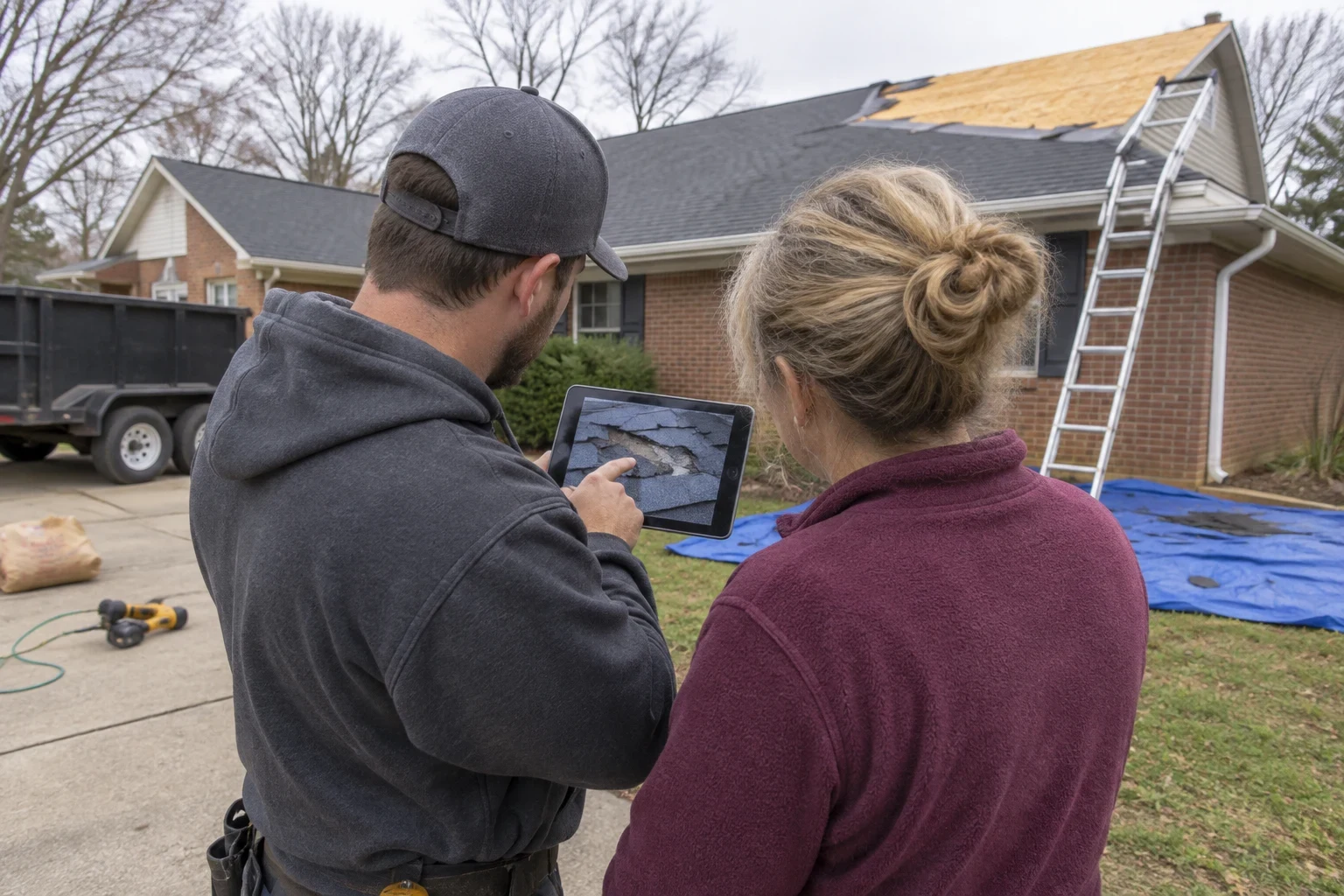
Every problem gets a photo and a plain note: what it is, what caused it and how soon it needs attention.
Signs your roof is due for an inspection
- Granules in the gutters
- A layer of sandy grit at the downspouts means the shingles are shedding their protective coating and wearing through.
- Stains on ceilings or attic wood
- Brown rings on drywall or dark streaks on rafters point to a leak. The source is often several feet uphill from the stain, which is why we trace it from both sides.
- Hail or high wind
- Hail can bruise shingles without breaking them, and wind can unseal tabs that look fine from the ground. Both shorten roof life, and both are easier to document for an insurance claim when caught early.
- A roof past 15 years
- Standard asphalt shingles start losing flexibility and sealant strength in their second decade. We estimate the remaining service life, so a replacement becomes a planned project instead of a surprise.
- Buying or selling a house
- A roof-specific inspection goes further than a general home inspection and gives both sides clear photos to negotiate from.
- Moss, streaks or a sagging ridge
- Dark vertical streaks tend to be algae growth, which affects looks more than performance. Moss is a different story: it stays damp and keeps the shingle surface wet, and a ridge line that dips can signal decking or framing trouble underneath.
Inspection day, step by step
- 1
Setting up the visit
On the phone, let us know what caught your attention and, if you know it, the year the roof went on. We pick a time that works for you and talk with you before anyone climbs a ladder.
- 2
On the roof
We walk the slopes in roof-safe footwear and check every field, valley, penetration and edge. If a roof is too steep or wet to walk safely, we inspect from ladders at the eaves and from the attic instead of taking chances.
- 3
From the attic
If you have attic access, we check the underside of the decking, the insulation and the ventilation. This is where slow leaks and condensation problems show up first.
- 4
Walking through the photos
We go over the photo report with you, separate what needs attention now from what can wait, and give you a written line-item estimate for any work. There is no pressure to book anything.
- 5
Checking back after any work
If we handle the roof repair or roof replacement, we come back once it is finished to look it over and show you how to care for it: keeping valleys and gutters clear, trimming limbs off the roof and what to watch for when storms roll through. Architectural shingle roofs we install carry our 5-year workmanship warranty.
What the inspection costs and what moves repair pricing
The inspection itself is free. What any follow-up work costs depends on what we find, and the photo report shows you the reason behind each line of the estimate. These are the factors that move that number.
- Square footage and slope
- A larger roof takes more shingles, underlayment and labor hours. Steep slopes call for harnesses and staging, which slows every step of the job.
- Condition of the decking
- Rotted plywood or OSB has to be replaced before new shingles go on. We mark suspected soft spots in the report, though the full extent only shows once old shingles come off.
- Chimneys, skylights and vents
- Every opening through the roof deck is sealed with flashing cut and fitted for that spot. A simple gable with two vent pipes goes quickly, while a roof broken up by a brick chimney and skylights adds hours of metalwork.
- Repair versus replacement
- Patching an aging roof again and again can cost more over a few years than replacing it. We give you an honest read on which makes sense, and financing is available through Acorn Finance for larger jobs.
- Insurance involvement
- When storm damage is behind the problem, the claim may cover much of the work. We offer adjuster meetings and help through the insurance claim process.
Roof inspection questions
- Is the roof inspection really free?
- Yes. The visit and the photo report cost you nothing. If we find something worth fixing, we give you a written estimate and the decision is yours.
- Do you need to get into my attic?
- We would like to if there is an accessible hatch or pull-down stair. The attic shows leaks, condensation and ventilation problems that are invisible from the shingle side. If there is no access, we note that in the report.
- Will your photos be useful for my insurance claim?
- Usually, yes. Clear, dated pictures of hail bruising, lifted tabs or missing shingles give the adjuster something concrete to review. We can meet the adjuster on site and help you through the claim process, though the insurance company makes the coverage decision.
- How frequently should a roof get checked?
- We suggest one look each year, and another after any storm that brings hail or strong gusts. The older the roof, the more those visits pay off, because sealant strips and pipe boots are the parts that tend to give out after the 15-year mark.
- Will you push me to replace my roof?
- No. Plenty of inspections end with a small roof repair or nothing at all. If replacement is the better value, the photos will show you why, and you can compare that against continued repairs.
- What happens after you finish work on my roof?
- We check back once the job is done to make sure everything is sealed and draining the way it should. We also explain simple care, like keeping valleys clear and watching the pipe boots, so small issues do not grow.
Find out what your roof needs
One visit gets you photos of every problem and a clear sense of what to do next. We cover Siler City and nearby towns like Pittsboro, Liberty and Sanford.